A fairly amazing-sounding Better Beer Society brown bag series event at Butcher & the Boar, some revised menus at local restaurants, a local foodie’s epic Mother’s Day feast, tasting notes for Summit Pilsner and Steel Toe’s Provider, the Star Tribune’s Taste 50, and a new urban farm in Minneapolis.

Becca Dilley / Heavy Table
We found 2011 to be a very good year for Upper Midwestern food, overflowing with potential nominees for our annual Silver Whisk Awards, but that may just be the bountiful era we’re living in.
We’re proud to offer up for your consideration our 2011 Silver Whisk Award winners. Collectively, they inspire us, stoke our imaginations, make us proud to hail from the Upper Midwest — and create some of our favorite food.
Without further fuss, our 2011 choices for Best Purveyor, Best Chef, and Best New Establishment.

Natalie Champa Jennings / Heavy Table
Best Purveyor: FROZBROZ
Cotija cheese, tomatoes, Ritz crackers, fresh goat chevre, pita chips, and apple crisp: These aren’t really the types of flavors most people consider when pondering their ice cream options. But in an area chock full of culinary artisans, that type of anything-goes creativity is what sets FrozBroz apart.
Started by friends Ben Solberg (left) and Erik Powers (right), in many ways FrozBroz has been in the works for a decade. The pair have cooked together for 10 years and often considered going into the food business together or collaborating on a cookbook, but no plan really stuck. Then, three years ago, both received ice cream makers as gifts and the competition to make the best flavors caused something to click.
Solberg got a suggestion from food website editor Lee Zukor to start a blog about their efforts, and in May 2011, they followed through, with the vow to create a new flavor every week.
The result has been impressive — not only have they played with traditional flavors such as caramel, chocolate, and butterscotch, but they’ve concocted tastes that are new to the ice cream world. For example, honey Dijon and pretzel, or vodka blueberry and basil. Their latest (as of this writing) is chocolate-peanut butter with Medjool dates and pecans.

Natalie Champa Jennings / Heavy Table
As a classically trained chef, Powers brings the sharp execution that comes from training and experience, while Solberg is more of the “nothing is impossible” type. They may have started out as friendly competitors, but now each values the unique perspective of the other when it comes to brainstorming flavor ideas.
Every Wednesday, they meet to discuss new possibilities and usually come up with about a dozen potential flavors. Powers says, “Ben is always dreaming up flavor ideas that are oftentimes really out there. He’s not a classically trained chef, so he’s never been taught to put any limits on anything he does with food. To him, the impossible is possible until he’s proved wrong.”
Solberg adds that it’s Powers who takes some of the craziest ideas and gets them to the point where they work. For example, they’ve had some skirmishes with ingredients like Ritz Crackers, but Powers figured out how to make that one shine.
“I’m usually the one that throws all the wrenches in because I want to do something that isn’t supposed to be done and it’s Erik’s skill that gets us there,” Solberg says. “He’s too modest. Really, he’s a star.”
With such obvious brotherly affection for each other and their creations, it’s not hard to see why their venture is working. They both emphasize that they’re friends first and business partners second. “Our friendship will not be jeopardized and that will always come before the business,” Powers says. “It’s a crucial element to what makes FrozBroz.”
Their high level of ingenuity and sense of adventure has led to significant grassroots support, which is what they’ll need to get to the next level: actual distribution.

Natalie Champa Jennings
Everything in the ice cream is made completely from scratch, including their ice cream bases. Many ice cream stores buy pre-pasteurized ice cream from another source and add ingredients, says Powers. Since the FrozBroz partners need to pasteurize the homemade base themselves, it makes it more complicated to get their creations to market. They tried using Kickstarter to fund their efforts, but got denied (obviously, no one at Kickstarter has tried their ice cream, or this story would have a different ending), so now they’re looking at different funding directions to get off the ground.
In the meantime, their flavors are drawing crowds online instead. Every week, they post the new flavor on their blog and Facebook page and tell their 600+ fans that two lucky commenters will get a pint in a random drawing [editor's note: corrected from "two pints for one commenter" 2/29/12]. For the last creation, almost 70 people chimed in for the chance.
Once they have their pasteurization ready for commercial distribution, it should be interesting to see how they whittle down their flavors list, if that’s even possible. No matter what happens, it’s likely that they’ll retain the enthusiasm, local ingredient sourcing, innovation, and optimism that truly do elevate FrozBroz as a purveyor.
– Elizabeth Millard

Becca Dilley / Heavy Table
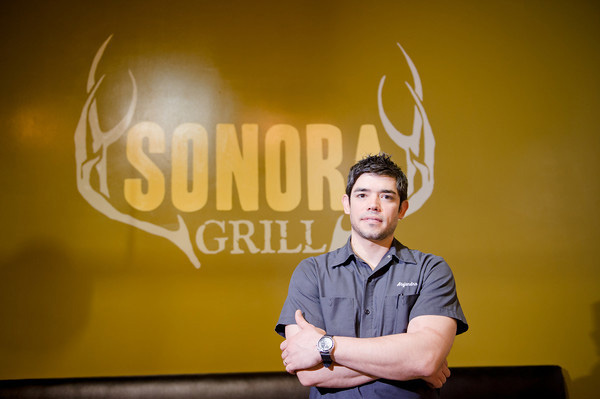
Best Chef: ALEJANDRO CASTILLON OF SONORA GRILL
We are very pleased to announce that Sonora Grill‘s Alejandro Castillon is Heavy Table’s Best Chef of 2011. His accessibility and out-of-the-box creativity are radically expanding our conceptions of what the food of el mundo hispanohablante could be, consistently surprising us with the scope of his imagination.
Castillon, a native of Hermosilla, Sonora, immigrated to Minnesota 10 years ago on a whim. “After college, I came here for a 3-month vacation,” says Castillon. “I liked it so much that I decided to move here for good!” He put in his time at his first job as a line cook at the now-departed Parkview Cafe in St. Paul, building onto the basic vocabulary he carried with him from Mexico. “I never worked at restaurants at home. I learned everything just from paying attention to my mom.” Three years later, he moved into the kitchen at Solera; from there, he moved up the ranks to Barrio, Be’Wiched, and Bar La Grassa, the James Beard Award-nominated restaurant where he achieved the rank of sous chef.
Despite enviable positions in some of the most acclaimed restaurants in Minneapolis, Castillon felt stifled. Working for other people just wasn’t doing it for him: “I felt tired all the time, working for somebody else.” Like many young chefs and cooks, Castillon had a restaurant incubating inside of him, waiting for the right time to hatch; and like many young chefs, he lacked the resources to make it all happen.

Becca Dilley / Heavy Table
With nary a pinch of business experience between the three of them, Castillon and his partners and fellow Sonorans, Conrado Paredes and Fernando Arnanda, sought assistance from the Neighborhood Development Center (NDC), which provided them with loans for equipment, help with formulating a business plan, legal aid, and an affordable space at Midtown Global Market.
Since Sonora Grill opened in the summer of 2011, Castillon’s refreshing and versatile take on Latin American street food has been slowly but surely accumulating positive reviews and fanatical customers. The menu is uncannily familiar: instead of tortas and tacos, there are bocadillos and caramelos. Instead of sour cream, there is a rainbow of house-made, flavored aiolis. “Go ahead and keep eating your beloved burritos, but you’ll be missing out if you don’t expand your repertoire to include pinchos, caramelos, and bocadillos,” writes Rachel Hutton in a review for City Pages. In a way, it feels like we’ve graduated to the next level of culinary awareness, and Castillon’s menu is the reward.
“There are so many places in Minneapolis that are ‘Mexican,’ but it’s more like Texas-style food,” Castillon says. “I don’t like Mexican food that is not really Mexican. It’s better to have real food, not nachos with cheese all over them.” One could compare Castillon to Chicago’s Rick Bayless in that regard: Their passion lies in resuscitating the image of Mexican food in a world gone Crunchwrap-crazy. But while Bayless rarely breaches the Mexican border, Castillon feels no such obligation toward authenticity.

Becca Dilley / Heavy Table
Castillon cites the cuisines of Cuba, Peru, Spain, and Mexico as influences, but there are also surprising injections of Korean, Japanese, Italian, and Chinese techniques. In the past year, we’ve seen a surge in Asian-Latin fusion cuisine, but Castillon’s menu goes beyond merely stuffing bulgogi into a tortilla and calling it a day. More importantly, he values simplicity above all: “At other restaurants, I would see these dishes with 12, 13 components and think, ‘I can do this with four or five.’” His is a more subtle touch befitting a 10-year veteran of fine dining.
“The ideas just come,” says Castillon. “I like always being able to think of new recipes and try new stuff.” Owning his own restaurant has set his mind free, and it’s gone in some very unusual directions. He’s paired tempura-battered shrimp with cilantro aioli on one dish and Korean short ribs with chimichurri salsa on another. Earlier this year, he came out of left field with shrimp spring roll-style flautas accompanied by a touch of jalapeño and a soy sauce aioli.
Angharad Guy put it best in a review for Metromix: “Sonora Grill might be one of the most authentic examples of ‘fusion’ dining we have in the Twin Cities as its menu juggles Peruvian rice, Spanish pincho with an Argentinian twist and Sonora hot dogs without missing a beat… Alejandro Castillon and his small team at Sonora Grill clearly have talent and aren’t afraid to flaunt it.” Continue reading The 2011 Silver Whisk Award Winners »

Becca Dilley / Heavy Table
The Silver Whisk Awards celebrate the best of local food in the Upper Midwest; only three are given out, for Best Chef, Best Purveyor, and Best New Establishment. Winners of all three categories will be announced at the end of February.
Now that we’ve had some time to digest our eating escapades in 2011, it’s clear it was a banner year for eating in the Twin Cities. We were impressed by all manner of new spots — from the splashy to the lowbrow, from the established players to the newcomers.
Our 2011 Silver Whisk Award nominees for Best New Establishment are the three places we feel best showcased local talent and innovation. It was the four-in-one Japanese funhouse, featuring the sushi we didn’t know we couldn’t live without. It was the table we left work early to get, to savor a panoply of artfully executed bites. It was the biscuits that rocked our world, from the corner space that effortlessly glides from bakery to eatery.
It was a great year. Here are three more bites.
Masu Sushi & Robata
The success of Masu Sushi & Robata isn’t, for the most part, incredibly surprising. It has a great location, a smart design by Shea Architects, well seasoned at talent at every rung, cocktails by Johnny Michaels, and the will to encompass a great breadth of Japanese cuisine.
What’s surprising is how it’s been able to consistently deliver on its initial promise. It’s combined successful aspects of several similar places around town without sacrificing quality in any of them and forging their own unique identity. We’ve found only minor chinks in Masu’s armor. And we’ve tried – repeatedly.

Lars Swanson / Heavy Table
Tim McKee continued to be a familiar presence in 2011. Through the continued success of La Belle Vie, his year began with a highly publicized rescue mission (Uptown Cafeteria) and ended with the demise of a previous one (Il Gatto). When proprietor Sushi Avenue tapped McKee to conceive Masu, we were slightly worried it would be just a high-profile entry into an already crowded sushi market.
But since its heavily-chatted-about opening, Masu has vaulted into the upper echelon of Twin Cities Japanese eating. Its menu is as deep and enveloping as the giant geisha eyes that adorn its dining room. Masu features heaps of terrific sushi, a comprehensive listing of Izakaya, 14 iterations of noodles, about 30 choices of robata, and, best of all, a more-than-respectable batting average in each category.
In a year that Fuji-Ya touted no longer serving Bluefin funa, Masu has been using entirely sustainable seafood since its inception. If you don’t go with a big group, consider a seat near the head of the bar to watch the deft hand of Origami veteran A-san Yamamoto at work.

Becca Dilley / Heavy Table
The rice itself is the X-factor in A-san’s sushi. It’s tender and puffy, just adhesive enough with the right amount of sweetness. His nigiri and sashimi are exquisite and his specialty rolls can stand up to the best in town. Our favorite continues to be the Firecracker -– a wonderfully balanced roll with creamy avocado melded into crunchy tempura. And kudos to Masu for grinding the wasabi paste in house.
The balance of the menu is helmed by La Belle Vie graduate and one-time Japanese exchange student Alex Chase. Perhaps most notable are the noodles, built on wonderfully nuanced, slow-simmered broths. The Tonkatsu Curry Ramen (below) was this author’s most frequently ordered dish of 2011. It’s a harmonious collection of texture, between the fresh greens, tender noodles, gooey poached egg, and crunchy pork. The small dish of Togarashi accompanying the noodles is a thoughtful touch.
We’ll show up to Masu for the robata alone. It’s especially nice to have that lighter menu section around at midday ever since Obento-Ya began downplaying theirs during lunch. The chicken meatballs, the bacon-wrapped quail eggs, and glazed sweet corn comprise our usual trifecta. And as if their snacking resume wasn’t already robust, Masu has added addictive pork belly and shrimp tempura steamed bun sandwiches during happy hour.

Becca Dilley / Heavy Table
Some of the drinks, namely the Gummi sours, can come off as overly sweet. But for a food menu that largely avoids overdoing things (especially in what would seem like an enticing atmosphere to do just that), we can forgive it the cocktails. Instead, opt for the clean and sophisticated Japanese For Beginners, the gin and pickled watermelon Rano Pano, or the spicy Godzillita.
Masu’s second location is slated to open at Mall of America in a few months. This is encouraging news for shoppers faced with a selection of restaurants similarly over-the-top in concept but without the food to back it up. Also encouraging for a city awash in sushi: Masu is not only surviving, but thriving.
What we wrote then: “From its clear concept to its smart-as-a-whip Japanese pop culture interior to its quirky, well-executed food, the place feels legitimately cosmopolitan.” – James Norton, June 8, 2011
Tilia
Does anyone want to stake us to open a craft cocktail bar near Tilia? First, go there and savor the profound deliciousness of Steven Brown’s offerings. Then notice the crowd of people waiting three deep at the bar and disappointed parties leaving because the wait is over an hour, and tell us that’s not a sustainable business model.
Here’s a dirty secret: It’s not as hard to get a seat at Tilia as you might have heard. Yes, if you show up with six friends at 7pm on a Friday, you might find yourself at the bottom of two or three Belgian brews from their well-selected tap list before sitting down. Continue reading 2011 Silver Whisk Award Nominees: Best New Establishment »

Becca Dilley / Heavy Table
The Silver Whisks celebrate the best of local food in the Upper Midwest; only three are given out, for Best Chef, Best Purveyor, and Best New Restaurant.
Our list of nominees for the best purveyor showcases the particular culinary alchemy that can turn the usual into the artisan. The companies here demonstrate that items as simple as ice cream, beer, soda, and even sunflower oil can be lovingly turned into gourmet treats — proving, once again, that the Upper Midwest is a haven for inventive food and drink creators.

Sarah McGee/ Heavy Table
Harriet Brewing
Over the past year in particular, the Twin Cities have nurtured numerous craft beer efforts, resulting in extensive beer lists all over town and fresh breweries popping up like Whac-A-Moles. These efforts were boosted by passage of the “Surly bill,” which made it legal for brewers to sell pints of their own beer to brewery visitors. Along with major expansion of homebrew store Northern Brewer, it all added up to the Year of Beer in these parts. A particularly notable entrant to the growing beer scene has been Harriet Brewing, which celebrated its first anniversary in January.
Although some might fret about the staying power of so many microbreweries, look for Harriet to stick around. Brewer and owner Jason Sowards seems to be a fan of the constant tweak, and it’s resulted in some dynamic, distinctive flavors that are tough to resist.
For example, the brewery’s limited edition Rauchfest was a German-style smoked lager brought out to celebrate Oktoberfest, and its ample toastiness balanced out a strong kick of malt. Other beers, like the Saison Nourrice and Wodan Weizen promise notes of banana, clove, citrus, and pepper. Sowards claims there’s even some hints of graham crackers and orange marmalade. With such complex tastes, who needs food?

Sarah McGee / Heavy Table
When Harriet opened, it became the first non-brewpub brewery within the city limits of Minneapolis since 1975, when the Grain Belt Brewery closed. Nestled on Minnehaha Ave., close to Patrick’s Cabaret, the brewery is in continual innovation mode, Sowards notes, and that’s part of the fun.
“We’ve seen a growing move toward more complexity and variety when it comes to local beer,” says Sowards. “With that, there’s the demand to develop beers that are unique. That can be intimidating, but it’s also a great challenge that we love.”
Recent changes in tap room licensing have helped to foster smaller breweries, he adds, and as a result, beer drinkers are driving demand for more nuanced flavors. That’s what’s allowed Sowards to transition from brewing in his garage to whipping up beers that include notes of banana and feature labels that look like tarot cards.
Another component of Harriet’s staying power is the expansion of its taps; you can find Harriet at the usual beer-loving locations like Happy Gnome, Republic, and Pat’s Tap, but they’ve also found their way into the Hilton in Bloomington, Market Barbeque, and Lyon’s Pub. Kegs are available, too, at France 44, Zipp’s Liquors, and The Four Firkins.

Becca Dilley / Heavy Table
The brewery will soon boast its own taproom, too: the city recently approved a measure that will allow Harriet to sell pints of beer at the brewery.
“Back in the day, thousands of people used to brew, it used to be a neighborhood thing,” says Sowards. “Then came Prohibition and bootleggers and anti-beer laws. But with what’s going on right now, with the change in laws and the huge interest in beer, we’re gravitating back toward that community model.”
That kind of local focus — not to mention the commitment to innovation — gave Harriet the edge over its many competitors in our Silver Whisk Awards. We can’t wait to see what Sowards whips up next.

Becca Dilley / Heavy Table
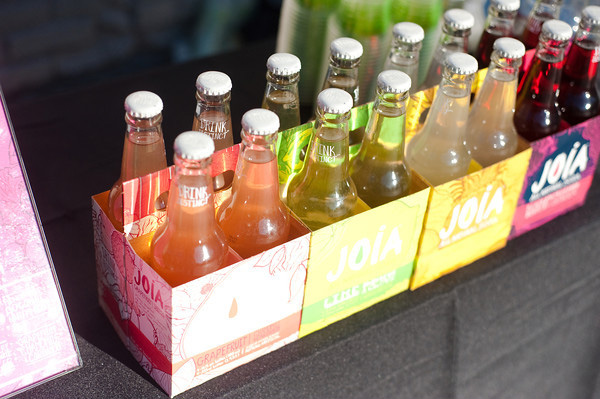
Joia Soda
Creativity in liquid form isn’t reserved solely for beer and cocktails, though. Witness the rise of Joia Soda, which is making its mark in a beverage category that’s quickly getting more and more competitive.

Becca Dilley / Heavy Table
Like any good business creation story, Joia started as a casual conversation among friends. Co-founders Bob Safford and Steven Walker were talking about the surge in interesting local cocktails and began wondering why someone hadn’t thought to blend herbs, spices, and fruits in the same way for sodas. The challenge began.
Launching as Boundary Water Brands with another co-founder, Carleton Johnson, the small firm brought on bartender Dan Oskey, of Strip Club fame, and began testing dozens of recipes.
Some were amazing, says Johnson, but wouldn’t have been commercially viable to make. Eventually, after over a hundred blends, they dubbed themselves “Joia” as an expression of joy, and released four very distinct sodas.
Each flavor differs greatly from each other, and from anything else available. The one that comes closest to a mainstream taste is the pineapple, but even that has nutmeg. The others blend together hibiscus, clove, cardamom, and ginger with strong fruit flavors of lime, grapefruit, and blackberry. Although each must have its fans, one flavor isn’t trumping the others when it comes to sales, says Johnson.
“We’re very pleased and gratified that people love the product as much as they do,” he notes. “What we’re finding is that people like to try them all, they don’t stay with one over the other. I think that’s great.”
What’s next? Johnson wouldn’t divulge the flavors under development, except to say that one will be more “orange-based” and the other has more ginger involved. They’ll keep tweaking until they get more sodas that can be replicated commercially while still maintaining the distinctive creations that are already on the market. Limited shelf space at supermarkets for specialty items means we won’t be seeing Joia take over the soda aisle too much, but that’s fine with Johnson and his fellow founders. They like the idea of keeping the soda a gourmet product with a dedicated following. Continue reading 2011 Silver Whisk Award Nominees: Best Purveyor »

Becca Dilley / Heavy Table
Welcome to the 2011 Silver Whisk Award nominations. The Silver Whisks celebrate the best of local food in the Upper Midwest; only three are given out, for Best Chef, Best Purveyor, and Best New Restaurant.
The nominees featured this year for the Best Chef Award are a diverse lot: Two took the traditional route to chefhood; one had never worked in a restaurant prior to opening her own; and one is admittedly “not a chef” at all. We will be the first to acknowledge that this is stretching quite a bit — but as times change, so do those who find their vocation in teaching others to cook and eat well. Both inside and outside of their respective kitchens, this year’s nominees have not only inspired us as diners, but have taught us to find beauty in the mundane and really appreciate the often-overlooked potential of our surroundings.
Below, presented with our annual lack of a particular order, are the nominees.
The Pizzaiola: Ann Kim of Pizzeria Lola

Natalie Champa Jennings / Heavy Table
A week before opening night, Ann Kim finally told her mother, Young Kim, about her restaurant, Pizzeria Lola. “She never approved of anything I did,” Kim says. “I mean, she already disowned me once before! If she had seen the space before we finished it, I think she would have had a heart attack.”
Kim’s awe of her mother’s judgment is palpable in her focus and extensive preparation for the restaurant. After leaving her 9 to 5 job as the director of education at the Hennepin Theater Trust, she and her partner, Conrad Leifur, sat down and formulated a plan of action: “I focused on one thing and did everything in my power to do it well.” Kim enrolled at the International School of Pizza in San Francisco, graduating in January 2010. She followed that by apprenticing with Tony Gemignani, the school’s owner and a nine-time world champion pizza maker, and eventually developed her own style of pizza-making: a “bread-centered” fusion of Neapolitan and New York styles.
At Lola, Kim’s conscientious approach extends beyond the pizza to the sensory experience of the restaurant as a whole. “I want the restaurant to evoke my memories of home: The moment you walk in, you smell food cooking.” And although Kim is acting as a consultant for Vero, a new pizza restaurant opening at the Minneapolis-St. Paul Airport, she’s ultimately focused on her work at 56th and Xerxes. “Starting out, we knew we wanted Pizzeria Lola to be the kind of place you’d go and see your neighbors. It’s amazing to see that we have so many regulars who come in week after week.” Kim was never expecting people to visit from all over the metro, sometimes waiting in excess of an hour during peak times.
Kim and her mother have come a long way since the opening. These days, Young Kim calls the restaurant about once a week to see how their sales are doing, see how busy they’ve been, and remind her daughter not to let the awards and press get to her head. “My mom’s my biggest cheerleader now. Ultimately, she realized that I found my calling — and she is finally, truly proud of me.”

Natalie Champa Jennings / Heavy Table
Personal cooking philosophy: Create food that tastes good.
Words of advice for a new chef: First, be aware that the work is terribly hard. It’s not for the faint of heart. Second, do research, ask questions. And lastly, chase your dreams. Just go for it!
What she’s most proud of: Having the courage to do this in the first place.
Her favorite meal: Whatever my mom would cook.
The Educator: Russell Klein of Meritage

Kate N.G. Sommers / Heavy Table
Russell Klein is no stranger to the Silver Whisk Awards: He was nominated for Best Chef once before in 2009. Since then, Meritage has continued to bring in award after award in both local and national press. This past year, he and his team ambitiously launched an acclaimed oyster bar, crepe stand, the blockbuster Oysterfest, and an upcoming brasserie and raw bar at the Minneapolis-St. Paul airport.
Even so, Klein maintains that the basic Meritage experience is of the utmost importance. “We’re in no hurry to expand. Right now, we want to focus our attention on maintaining relationships with our guests and the community.” The restaurant’s weekly wine classes, which showcase the major wine regions of Europe and the United States, always fill up quickly. They attract students with a refreshing accessibility that, sadly, seems rather old school these days. Everything at Meritage is focused on educating their enthusiastic customer base, who turned out by the hundreds for seminars, demonstrations, and more than 15,000 oysters at last fall’s Oysterfest. “We’re unique in that we’re not just consumption-based; we have a larger mission, which is, and will always be, education.” Continue reading 2011 Silver Whisk Award Nominees: Best Chef »
The Heavy Table’s mission is to embrace and celebrate the best food and drink in the Upper Midwest. In support of that mission, we take time each year to profile and applaud some of the outstanding individuals who grow, brew, ferment, bake, serve, and otherwise facilitate the area’s great gastronomic bounty.
As we did last year, we’ll be giving out a total of just three Silver Whisk awards: Best New Establishment, Best Chef, and Best Purveyor. (Last year’s winners are not eligible for nomination again until 2013 — they were In Season, Sameh Wadi, and Uplands Cheese Company.)
Each award will be the result of a public nomination process, a staff-led winnowing of nominations, and a research / deliberation period before the announcement of our three winners.
Here are our criteria:
Best New Establishment
“Establishment” includes restaurants, bars, catering operations, and specialty shops.
“New” means it opened or re-opened for business within the 12 calendar months of 2011 (i.e. from Dec. 31, 2011 back to Jan. 1, 2011).
“Best” is very subjective, but we’re looking for places that:
a. Filled a new and important niche in the local gastronomic landscape.
b. Redefined the way local people think about food and drink.
c. Incorporated other local businesses (purveyors, etc.) in prominent and thoughtful ways.
d. Delivered a great value for the dollar.
e. Reflected Upper Midwestern terroir.
f. Incorporated a thoughtful approach to food and drink-related ethics.
Best Chef
“Chef” includes anyone cooking for restaurants, institutions, underground dining clubs, or other publicly accessible dining environments.
“Best” is very subjective, but we’re looking for people who:
a. Thought creatively about food.
b. Delivered memorable meals that could stand up to similar experiences in large markets like New York City, San Francisco, etc.
c. Incorporated other local businesses (purveyors, etc.) in prominent and thoughtful ways.
d. Taught the public something new about food and drink.
e. Acted as an opinion- or taste-maker reflective of the times.
Best Purveyor
“Purveyor” is someone making packaged or otherwise shipped food or drink for sale or resale, and can include farmers, ranchers, chocolatiers, brewers, bakers, and coffee roasters, among others.
“Best” is very subjective, but we’re looking for purveyors who:
a. Define excellence in their field when it comes to quality and flavor.
b. Successfully tried something new or risky over the past 12 months.
c. Incorporated local ingredients and cultural traditions.
d. Incorporated a thoughtful approach to food and drink-related ethics.
e. Delivered memorable food or beverages that can stand up to similar products in large markets like New York City, San Francisco, etc.
f. Incorporated a sustainable, ethical, fair trade approach (when possible) to making food.
Our Timetable
Today (Jan. 12): Nominations open. Any Heavy Table reader can nominate any establishment, chef, or purveyor in the Upper Midwest for a Silver Whisk award by emailing or leaving a comment on this post. Supporting details are helpful but not required. Self nominations are welcome.
Jan. 22, 2012: Nominations close. The Heavy Table staff will meet to deliberate the nominations and arrive at three finalists for each of the three categories.
Feb. 13 through Feb. 15, 2012: Finalists announced. Each finalist will receive a brief profile describing the reasons for their nomination.
Feb. 20, 2012: Winners announced. All three Silver Whisk winners will be announced via Twitter and Heavytable.com. Each will receive an extended profile and photos, plus a framed certificate to commemorate the win.

Becca Dilley / Heavy Table
As we look back at 2010, the theme that strikes us is “abundance” — despite challenging economic times, there seems to be no end to the creativity and courage out there in the Upper Midwestern food community.
So we’re very pleased to present 2010′s Silver Whisk Award winners. These are the Upper Midwestern food institutions and people that most caught our imagination, most inspired us, and made us most grateful for the privilege of eating their fine foods. Here we present our 2010 choices for Best Purveyor, Best Chef, and Best New Establishment.

Becca Dilley / Heavy Table
Best Purveyor: UPLANDS CHEESE COMPANY
Uplands Cheese Company inspires a remarkable level of passion in its believers.
Carlos Souffront, Zingerman’s cheese guru, describes it this way on the website: “Sometimes I think this is the best American cheese being made today. Like a European mountain cheese, it’s fruity in an apple sort of way — rich, deep, and sweet. It’s great paired with slices of pear, cubed on salads or all by its lonesome. If I had my pick of the world’s cheeses to enjoy, I’d come back to this one again and again.” And this is from a guy who pretty much does have his pick of the world’s cheeses.
Molly Harrington, supervisor of Surdyk’s cheese shop says, flat out: “It’s my favorite cheese. And it’s the favorite of a lot of people here.”
Jonny Hunter, who uses Uplands products in his Madison restaurant, (The Underground) Kitchen, says: “It’s pretty mindblowing.” He’s referring both to Uplands’ products and to the meticulous process behind them. In Hunter’s small restaurant, which has maybe 15 dishes, “there’s not a night that goes by that Uplands isn’t in six of our dishes.”
Despite all those superlatives, the people behind Uplands Cheese Company are soft-spoken, sincere, and deliberate. Two dairy farming families, Mike and Carol Gingrich and Dan and Jeanne Patenaude, began making cheese together 10 years ago in Dodgeville, WI. Andy Hatch (pictured above, right, with Mike Gingrich), a self-described city boy looking to get into farming by whatever means necessary, joined them about four years ago. Hatch started out as a cheesemaker and now manages the operation.

Becca Dilley / Heavy Table
That operation, by the way, is tiny, even by artisanal standards. Last year they produced about 90,000 pounds of cheese from a herd of about 140 cows. Uplands produces just three primary products: Pleasant Ridge, a subtly floral, nutty, hard raw milk cheese; Pleasant Ridge Reserve, which is aged an additional year; and, as of last fall, Rush Creek Reserve, a spoonably soft and slightly tangy washed rind cheese.
Nevertheless, Uplands has earned a solid reputation both locally and around the country. “In the Madison area, it’s like a classic already, in just 15 years,” says Hunter. “It has established itself in both consistency and flavor.” In the Twin Cities, Uplands cheeses are carried in Surdyk’s, France 44, the St. Paul Cheese Shop, Heartland, and Lunds and Byerly’s. Hatch says he ships cheeses from East Coast to West Coast and north to south.

Becca Dilley / Heavy Table
Uplands has also taken home a remarkable number of prizes in its short history. Pleasant Ridge Reserve took best in show at the American Cheese Society’s annual competition last year. It won the same honor in 2001 and 2005 (it’s the only cheese yet to repeat, let alone three-peat, the honors) and took the US Cheese Championships crown in 2003. Hatch and his team are waiting on tenterhooks to find out how they will fare among the 1,600 cheeses entered at the US Cheese Championships, being held in Green Bay, WI, right now.
Well, no. Actually, Hatch says, characteristically, “You never know what’s going to happen with those. It takes a lot of luck. It’s a point of pride when you win, but….” But, there’s an awful lot of work to do at home. Continue reading The 2010 Silver Whisk Award Winners »


Recent Comments