
The Heavy Table is a locally owned, reader-supported magazine. For nearly 20 years, we’ve told the stories of Upper Midwestern food and drink. Subscribe for as little as $5/month to receive weekly newsletters packed with original writing, photography, and art.
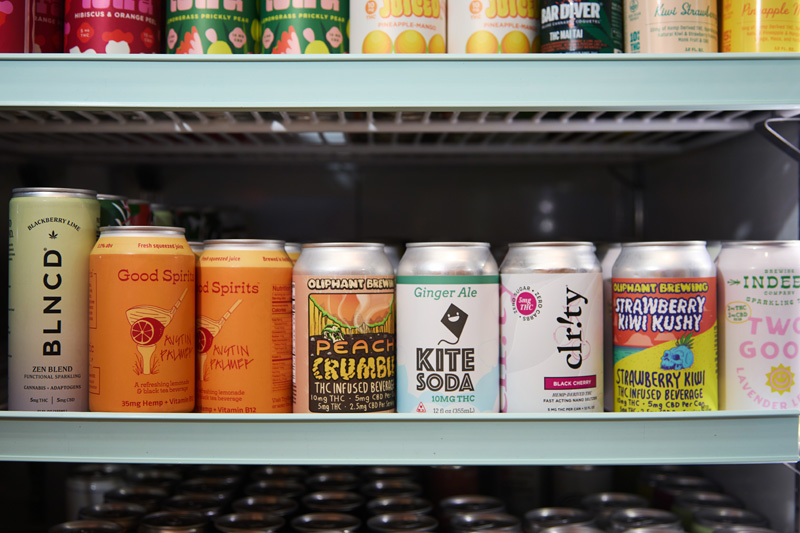
Despite their popularity, hemp-derived THC beverages are slated to become illegal at the federal level on Dec. 12, 2026. Liquor stores will remove any remaining inventory from the shelves. Restaurants and bars will stop serving the now-illegal beverages. The layoffs that have already started to ripple through the beverage industry will accelerate: manufacturing jobs all along the supply chain, sales staff at beverage distributors, delivery drivers, servers. Beloved, long-running breweries may shutter altogether.

“This is our generation’s Prohibition,” says Nick Kosevich, CEO and partner at Earl Giles. Although the looming federal hemp-derived is due to an appropriations act rather than a constitutional amendment, the comparison is still apt.
How did hemp-derived THC products become ubiquitous in Minnesota’s craft beverage scene, and why is such a popular product category being banned? It all goes back to the 2018 Farm Bill, which removed hemp and hemp seeds from the Drug Enforcement Administration’s schedule of controlled substances. The assumption was that farmers would grow hemp for fiber, grain, and non-intoxicating CBD products. However, savvy companies soon discovered that it was possible to derive THC from hemp and add the intoxicating substance to consumable products, including beverages.
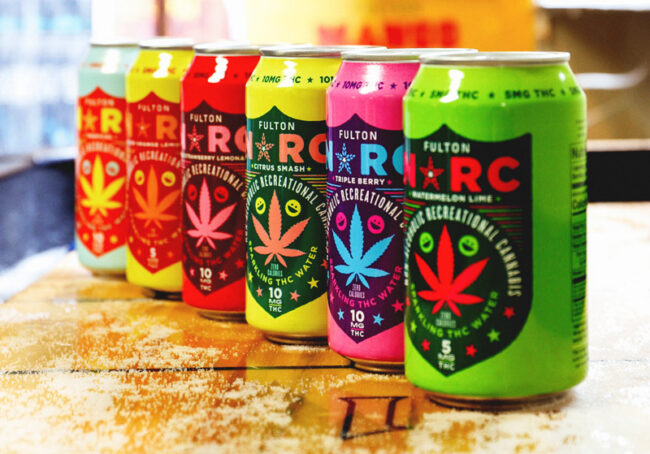
What unfolded next varied dramatically based on geography. In some states, there aren’t any regulations or restrictions on hemp-derived THC products, leading to concerns about product safety and usage by minors. Other states — including Minnesota — have taken a far more active approach. In 2022, a Minnesota law came into effect that set dosage limits for hemp edibles and beverages, as well as a 21-year age requirement for purchase. Crucially, these regulated low dose hemp-derived products could be sold at general retail locations including liquor stores, convenience stores, taprooms, restaurants, and bars.
Thanks to MInnesota’s robust regulatory framework, “we were one of the fastest markets to adopt these products from a consumer level as well as from a manufacturing level,” says Ryan Kopperud, VP of growth at Wild State Cider and Birdie, the cidery’s THC brand. Kopperud also serves on the board of Minnesota Hemp Beverage Producers, a trade association.
“Because we got so good at making these products in such a quality and safe way, Minnesota is a co-packing destination for many of the nation’s largest hemp THC brands,” he explains. Co-packing is an arrangement where a brewery with extra production capacity makes beverages for another company. “Many of the largest breweries in Minnesota don’t just make their own beer and their own THC beverage brands. They do, but they also are being paid by brands from many, many states to also produce those brands as well.”
Similarly, Earl Giles’ business stretches well beyond state lines. “Not only does Earl Giles make our own THC hemp beverages, but we produce and have helped formulate over 20 different business’ products,” says Kosevich. “We produce the concentrated liquids for lots of different companies, and we ship those raw materials across North America. Last year, hemp beverages were 40 percent of our business.”

Jim Diley (left), COO and co-founder of Fulton Brewing, believes that changing consumer behavior in the wake of the COVID pandemic encouraged Minnesota’s craft breweries to lean into hemp-derived THC beverages.
“Happy hours, bar scenes, all of the core components of what makes the adult beverage industry thrive, changed — not necessarily in a bad way, but we have to acknowledge they changed,” he says. “A lot of that volume that we lost during COVID was made up by THC. It’s not just that the beer industry was continuing to do its thing and be as robust as it was in the 2010s. It’s that that fell off sharply after COVID, and THC really replaced that volume to allow us to continue to be the small manufacturers that Minnesota is accustomed to.”
CUTTING AN INDUSTRY LIFELINE
Bob Galligan, director of government and industry relations for the Minnesota Craft Brewers Guild, characterizes hemp-derived THC beverages as a “lifeline” for many of the state’s breweries. The Guild represents about 70-75 percent of breweries in the state, and according to the Guild’s most recent survey, approximately 50 percent of their membership produces and/or sells hemp-derived THC products.
And now that lifeline will be yanked away.
The Continuing Appropriations Act, which was signed into law by President Trump on November 12, 2025 to end the longest government shutdown in history, rewrote the federal definition of hemp and capped the amount of THC in a product at 0.4 milligrams per container. (Minnesota’s cap is 10 milligrams per container for beverages and 50 milligrams per container for edibles.)
The law was originally supposed to come into effect Nov. 12, 2026, although that deadline has since been extended by 30 days. That means that on Dec. 12, 2026 — unless another extension or some sort of other fix is passed — the cans of hemp-derived THC beverages at your local liquor store will disappear, along with many full-spectrum CBD and medical marijuana products.
The ramifications of the federal ban on Minnesota-based hemp-derived THC beverage producers will be wide-ranging, but the exact impact is also somewhat unclear.
“There’s a lot of different aspects and it’s incredibly nuanced, incredibly complicated — I know that because I’m learning new things every single day and I’ve been one of the stakeholders and lobbyists on the issue for almost five years,” says Galligan.
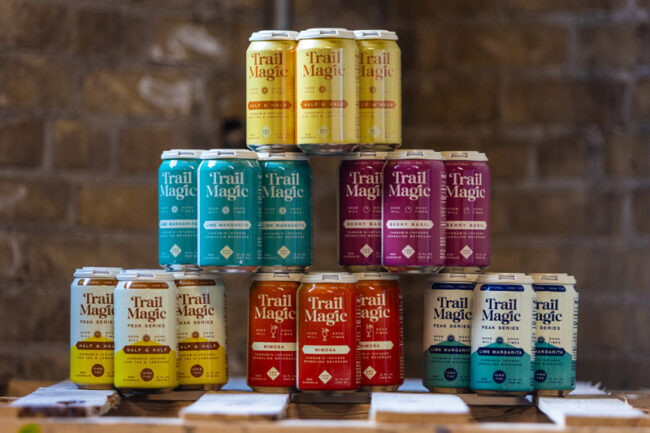
Even if hemp-derived THC beverages remain legal in Minnesota, a federal ban means that they can’t be transported across state lines. Producers including Earl Giles, Trail Magic (Minneapolis Cider Company’s THC brand), and Wild State Cider/Birdie specifically mentioned the loss of distribution in other states as a major blow to their businesses.
“Our THC beverages are sold in 18 states across the country,” says Kopperud of Wild State and Birdie. “We are talking about a 17 state contraction for the distribution of our products. Any sensible person can estimate what that does to a business like ours from a revenue perspective.”
Even if producers do have a market for their beverages within Minnesota, it may become difficult to source ingredients. “Lots of hemp emulsion is produced outside of the state, and so that would go away as it would no longer be federally legal to move it across borders,” says Diley. “The federal ban poses broader issues than just distribution.”
Although the ban isn’t scheduled to come into effect until December, every beverage producer we spoke to has already been impacted.
“I think you won’t find a Minnesota beverage business in the hemp THC space that hasn’t felt pressure and contraction over the past six months, at best. At worst, a lot of pain,” says Kopperud.
“What folks don’t realize about supply chains is that if there is hesitation at the retail level, that hesitation works its way backwards relatively quickly. When you’re talking about the potential for a federally illegal substance, the hesitancy of businesses is not trivial. And so when retailers stop buying, the distributors have fewer businesses to sell to. When the distributors stop buying from the suppliers like us, we have less product to make and obviously less revenue coming in.”

Jason Dayton (left), co-founder of Minneapolis Cider Co. and Trail Magic, agrees.
“We’ve seen retailers across the country already start to wind down ordering in anticipation of the ban going into effect,” he says. “We’ve had to adjust our forecasts and our production to make sure our team is ready for that.”
At Earl Giles, the effects of the ban hit in the first quarter of 2026.
“A big part of what we do at the Apothecary at Earl Giles is R&D in formulation, supporting other people’s opportunities in the hemp beverages space,” explains Kosevich. “This time last year, we had a line out the door, figuratively speaking, of clients wanting to enter the hemp beverage space. With the ban potentially coming into effect, you saw a lot of people pull out of that potential business opportunity… I would say at a minimum, we probably lost $1 million in revenue and potential opportunity just from the looming ban.”
Most of the hemp-derived THC beverage producers we spoke to were unwilling to go on the record about staffing cuts, citing confidentiality and company morale. However, Kosevich did note that some Earl Giles personnel have been moved to different positions, and Pepin Young, director of new business development at Bent Paddle Brewing Company, shared that the brewery has allowed attrition to reduce the workforce by not filling positions when someone leaves.
“We’ve built a company around our people and around our community, so it’s really difficult to see your staff and your team uncertain about the future,” Young says. “Job security is a huge thing. That’s what we have always wanted to provide, and that’s why it’s a difficult thing to feel slipping away.”
“I was a brewer before I joined the board of the Guild and I have now four friends who have lost their jobs just because of the uncertainty right now regarding the hemp ban,” says Galligan. “People have started to slow down or let staff go.”
Bill Nosan, the beer buyer at local liquor store France 44, noted that staffing cuts have hit the distribution side as well — one of his national sales representatives has already been laid off.
One thing everyone was willing to go on the record about was the mental and emotional strain of dealing with the looming ban.
“Let’s say it like this: it’s on my mind every waking moment and every non-waking moment,” says Diley. “In any one given period of time, half or maybe 40 percent of Fulton’s manufacturing time is spent making THC beverages. Well, if 40 percent of our volume goes down, we have to make really hard choices on how we navigate that from a production standpoint and from a staffing standpoint.”
“One of the hardest parts about what’s happening right now is the degree of ambiguity that still exists,” says Kopperud. “It’s really hard, as any business, to be planning for myriad outcomes at all times. Unfortunately, a lot of Minnesota beverage producers have had to live in that purgatory for over a year now, not knowing exactly what’s going to happen… There’s a toll that takes on individuals, on businesses, on an industry, to just be living in this constant state of evolution and ambiguity.”
THE BEGINNING OF THE END
On the retail side, the impacts to date haven’t been as dramatic. Nosan hasn’t slowed down his ordering at France 44, although he isn’t adding any new THC products to the lineup. “I’m going to be very aware of our inventory as we creep towards December,” he says. “I don’t want to be stuck on December 12 with a whole bunch of THC in stock that we can’t sell, or technically I think we could sell, but then it’s going to really open up a bunch of tax issues. So our idea right now is, December 11 is the last day we’re going to be selling it, if nothing changes between now and then.”

Erin Flavin (above), owner of non-alcoholic bottle shop Marigold, estimates that about 30 percent of the store’s sales are from hemp-derived THC products. “I have really cut down on ordering,” she says. “I wouldn’t take a new out-of-state beverage right now. Keeping it local is the only way to go for me.”
The effects so far shouldn’t be minimized, but they are only a fraction of the impact if the ban comes into effect. “The federal hemp band poses a real existential threat to many Minnesota breweries, and Fulton is included in that,” says Diley.
Galligan says that the most common question he gets asked by the media is how many of the state’s breweries would close.
“I don’t necessarily think that that’s the most important number because it would probably be only a handful, maybe 10, I don’t know,” he says. “But a number of those that would close are also our largest employers in the industry. It’s not necessarily the number of breweries that would be impacted or shut down or drastically lose business — it’s the number of jobs that would be lost if the ban actually were to go through.”
“There are legal concerns for retailers and distributors even though Minnesota has regulations allowing for these kinds of products to be sold,” says Kopperud. “It’s hard to know what to do when the size of the addressable market in Minnesota in the potential of a post-ban world is functionally a question mark right now. So we might contract from 18 states to one state, and even the size of the market in that one state is a thing that we don’t have a lot of clarity on at this point.”
Beyond beverage producers, the ban could negatively impact bars and restaurants that are currently profiting from the sales of hemp-derived THC beverages, as well as Minnesota as a whole. The sale of lower-potency hemp edibles and beverages generated $45.6 million in state tax revenue in the 10-month period from September 2025 to July 2026.
That lost revenue is unlikely to be made up by other sales. “We just have not seen any evidence that alcohol sales would just all of a sudden rip and boost if these products were to go away,” says Galligan. “There’s just not really much to pivot to for a lot of people… There’s no way anyone could write a business plan for the current economic climate. At least hemp was allowing some kind of success, but we just are not seeing that anywhere else.”
That said, some beverage producers are trying to cushion the impact of the ban.
Galligan notes that a handful of breweries are exploring adaptogenic beverages made with ingredients such as lion’s mane mushrooms. Kosevich says that Earl Giles is expanding distribution of their spirits into new states, launching a line of ready-to-drink cocktails, and doubling down on marketing existing products such as ginger beer.
Fulton Brewing is launching True North Beverage, a collective of adult beverage brands including Bemidji Brewing, Fulton Brewing, FINNEGANS, and N*RC Sparkling THC Waters that will share production, sales, marketing, distribution, purchasing and administrative resources.
“We’re looking to really stabilize operations and create a platform that keeps local craft beer at the forefront, while being able to take advantage of what is this great opportunity in hemp, despite the speed bump that is the pending hemp ban,” says Diley of the collective.
Similarly, there are some concrete steps consumers can take to help beverage producers.
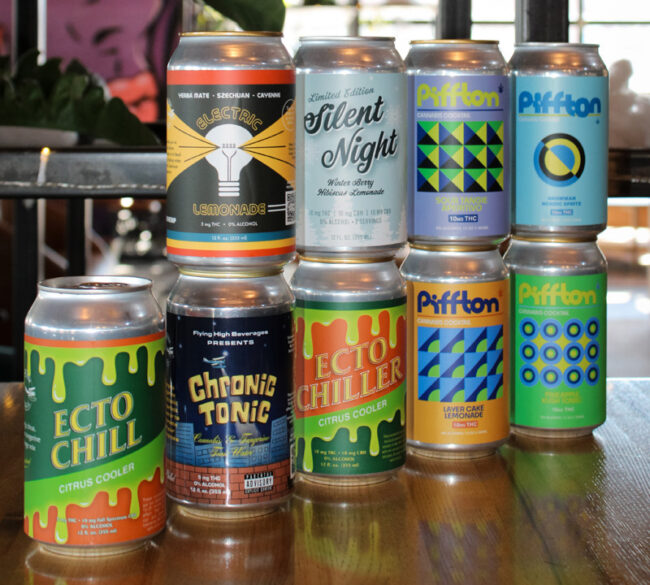
“Make sure to stock your refrigerator while you can in case things don’t go the way we want them to,” Kosevich says wryly. “The most important thing is to shop local,” adds Flavin of Marigold. “For people who are used to Total Wine, it would be really great if they visited an independent shop — it’s unknown if we’re going to survive the ban or not.”
Although Minnesota’s congressional delegation has been supportive of hemp beverage producers (Sen. Amy Klobuchar and Rep. Angie Craig, in particular, have co-sponsored bills to benefit the hemp industry) nearly everyone we spoke to encouraged consumers to contact their legislators.
“Call your congressperson, especially if you live in [Rep.] Pete Stauber’s district [in northern Minnesota],” says Dayton. “If you don’t care about THC beverages, fine, but you probably care about Bent Paddle.”
Despite the potentially catastrophic effects if the ban comes into effect, there was a note of optimism throughout most of our conversations with beverage producers — or “hope-timism” as Young of Bent Paddle called it. Many pointed to the one-month extension as a promising indicator, showing a certain amount of bipartisan Congressional support for the hemp industry.
And as Prohibition demonstrated, it’s awfully difficult to keep adult beverages out of the hands of those who want to drink them.
“It’s wild to see the diversity of the consumer base,” says Diley. “Everyone from a 21-year-old to — and I’m thinking of my parents — a 78-year-old, they’re consuming this low-dosage hemp… We need to do everything we can to support these types of products and make sure that they not only survive, but thrive in a well-regulated market.”
“What I tell everybody is that Yuengling [the oldest brewery in the U.S.] sold ice cream during Prohibition,” says Dayton. “If I have to sell ice cream, I’ll sell ice cream, but we’re not going anywhere.”